

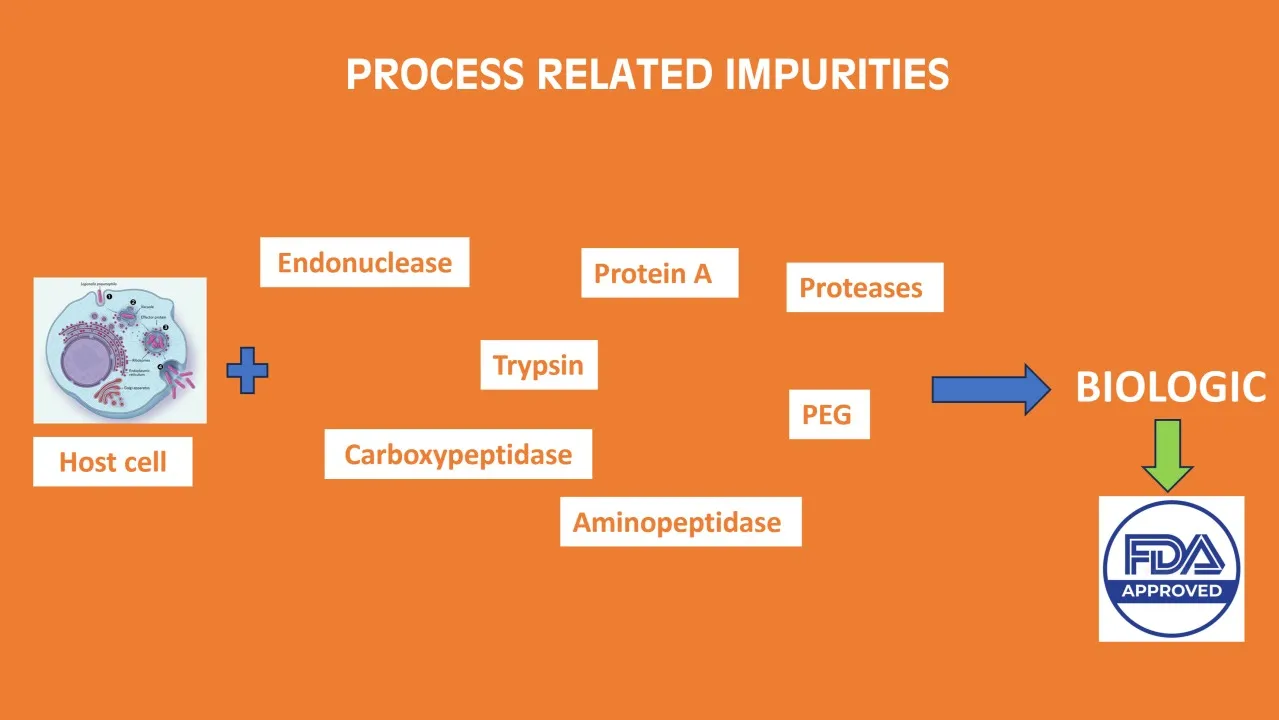
Process-Related Impurities in Biologics: Essential for Production, Critical to Remove
Process-Related Impurities in Biologics: Essential for Production, Critical to Remove
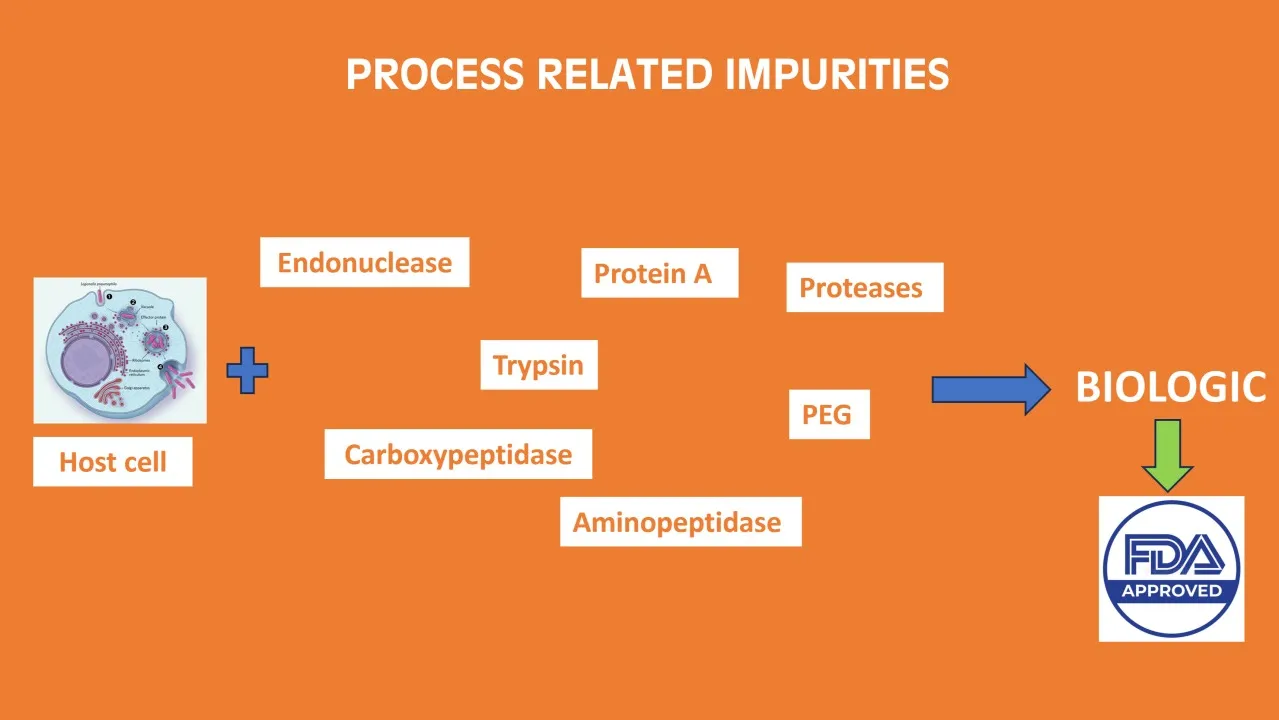
Biologics manufacturing relies on more than just cells and culture media. Throughout the process, many functional agents are added like enzymes, chemicals, ligands to enable expression, purification or modification of the therapeutic protein. But while these inputs are necessary, they’re not supposed to end up in the final drug.
That’s where process-related impurities come in: agents that support manufacturing but must be removed or minimized before release. Regulatory agencies now expect a detailed understanding of how these substances are cleared and failing to address them can delay or derail approvals.
What Is Process-Related Impurities?
Process-related impurities are materials added intentionally during biologics manufacturing. They are not part of the drug substance but may persist through purification if not adequately removed. These include:
- Enzymes like trypsin, endonuclease (e.g., Provinase, Benzonase) or proteases used during harvesting or processing
- Chemical modifiers like PEG in PEGylated proteins
- Affinity ligands like Protein A used in purification
- Buffer components, surfactants or solvents introduced in downstream steps
Even in trace amounts (ppm or lower), these residuals can affect product stability, trigger immunogenicity, or raise safety concerns especially in sensitive formulations like gene therapies, vaccines or monoclonal antibodies.
Why Regulators Are Asking More
Agencies like the FDA and EMA increasingly require sponsors to characterize quantify and justify impurity clearance. It’s not enough to state that purification steps “should” remove them but actual data is expected.
As part of late-stage development and biologics license applications, companies are now being asked:
- What impurities are used in your process?
- How much remains in the final drug product?
- Can your analytical methods detect them reliably?
- Is clearance consistent across batches and scales?
How to Measure Trace Residuals
Traditional assays like ELISA and HPLC often fall short when it comes to detecting low-level impurities especially when the product itself is present in high concentrations.
Modern tools like LC-MS/MS, particularly mass spectrometry, offer far greater sensitivity and reproducibility. They allow detection of protein and chemical impurities at low ppm levels, even in complex biologic matrices.
Such platforms can help monitor clearance of residuals like PEG, Benzonase, trypsin, or purification ligands across multiple steps, enabling both process understanding and regulatory confidence.
Plan Early, Prove Thoroughly
Identifying and removing process-related impurities is no longer a formality, it’s a key pillar of CMC strategy. The earlier these risks are addressed, the more robust the control strategy becomes.
In today’s regulatory landscape, the message is clear: if you use it, you must track it. If it persists, you must quantify and justify it.
Stay Updated
Follow Provis Biolabs on LinkedIn for the latest biotechnology insights, product announcements and company news.