


From bench to clinic: the critical differences between RUO and GMP reagents
FROM BENCH TO CLINIC: THE CRITICAL DIFFERENCES BETWEEN RUO AND GMP REAGENTS

In biotech and pharmaceutical development, the quality and intended use of reagents directly influence product safety, regulatory readiness and long-term scalability. As research advances toward clinical applications, one key decision stands out: When and how to move from Research Use Only (RUO) materials to GMP-grade reagents.
While both RUO and GMP products can play a role in the development pipeline, understanding their differences is essential for avoiding costly delays, rework or compliance issues downstream.
What is RUO?
RUO (Research Use Only) materials are intended for non-clinical laboratory research. They are used during:
- Early discovery
- Method development
- Feasibility studies
RUO reagents are not subject to the same level of regulatory control as GMP materials. They are not validated for human use and are not intended for use in the manufacturing, testing, or treatment of clinical or diagnostic products.
Their advantages include:
- Lower cost
- Shorter lead times
- Greater flexibility in formulation or sourcing
What is GMP?
GMP (Good Manufacturing Practice) refers to a system of regulations that ensures products are consistently produced and controlled according to quality standards. GMP compliance is mandatory when materials are used for:
- Clinical trials
- Diagnostic applications
- Commercial manufacturing
GMP-grade reagents must meet strict criteria for:
- Purity, identity and potency
- Full traceability of raw materials
- Batch documentation and quality control
- Personnel qualification and validated processes

Downstream Considerations: RUO vs GMP
RUO materials may be fit for purpose in the research setting but as a program moves downstream, using non-GMP materials can become a liability.
Key downstream risks of continuing with RUO:
- Regulatory pushback if materials are not appropriately qualified
- Inability to trace or justify raw material origins
- Difficulty validating processes built on RUO inputs
- Potential rework or reformulation to meet GMP standards
Even if RUO materials perform well experimentally, they may lack the documentation, consistency or safety profile needed for clinical development.
Taking the Leap from RUO to GMP During Discovery
Many teams wait until late in development to think about GMP—but that’s often too late. The transition can require:
- Reformulating assays or processes
- Requalifying materials or suppliers
- Generating new comparability or stability data
- Repeating testing or validation studies
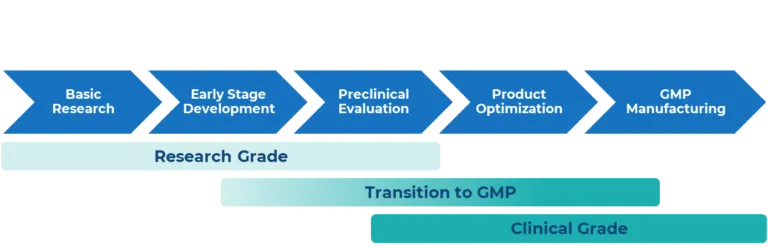
Planning the RUO-to-GMP transition early, even during discovery, can prevent delays later.
In some cases, starting with high-quality RUO materials designed to mirror GMP standards can ease the eventual switch. In others, switching to GMP earlier may avoid duplicating work or facing regulatory obstacles downstream.
Knowing when and how to transition is critical for a smooth and scalable path from research to real-world application.
Stay Updated
Follow Provis Biolabs on LinkedIn for the latest biotechnology insights, product announcements and company news.