

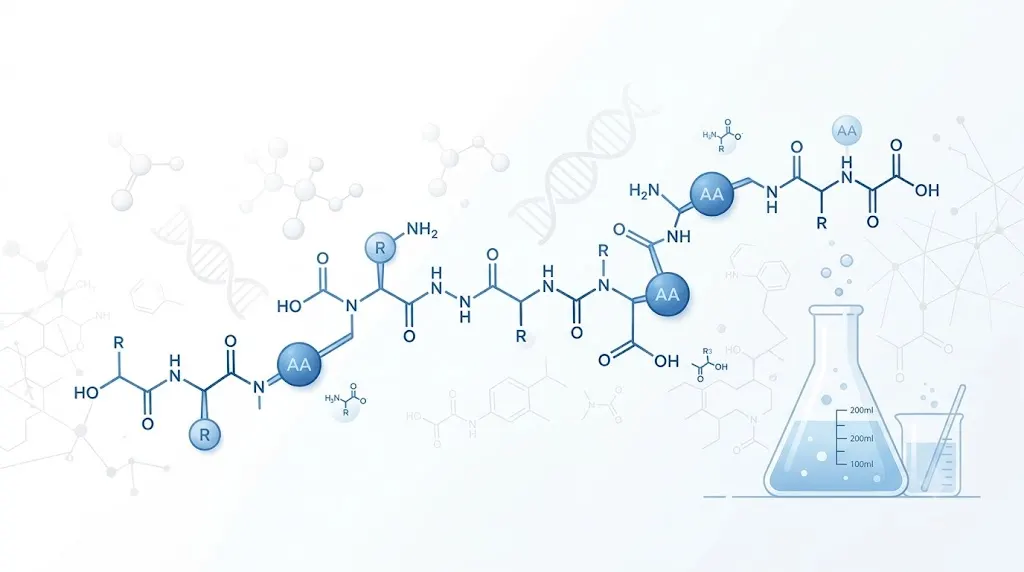
Custom Peptide Synthesis: SPPS, LPPS, or Hybrid — Which Route Fits Your Sequence?
Custom Peptide Synthesis: SPPS, LPPS, or Hybrid — Which Route Fits Your Sequence?
Peptide-based therapeutics and diagnostics now span everything from short signalling fragments to complex, multiply-modified sequences over 50 residues long. The synthesis route chosen at the outset determines purity, cost, and how easily a sequence scales from milligram R&D quantities to GMP batches. Provis Biolabs works across both major synthesis platforms and helps partners select the method suited to their specific peptide.
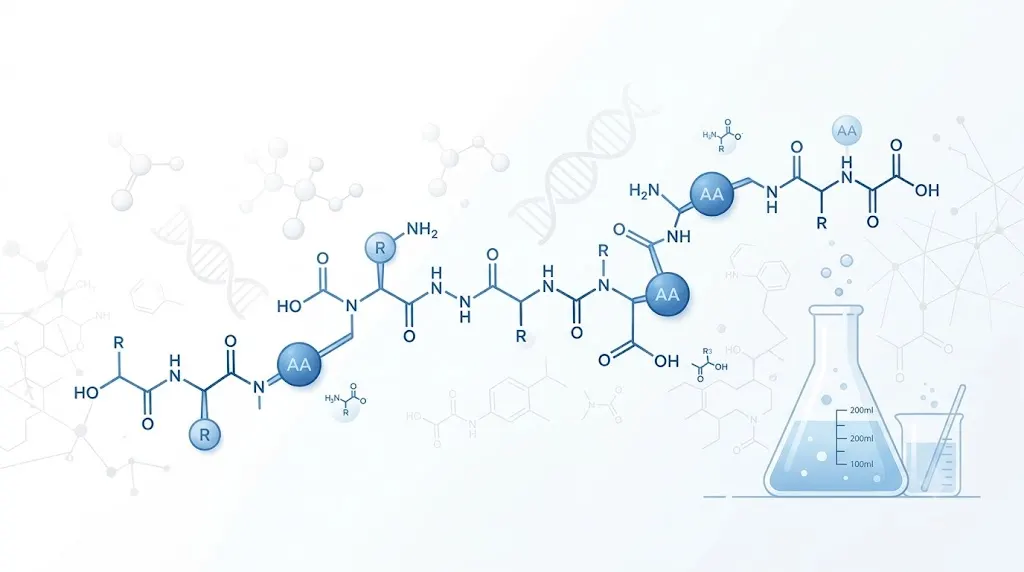
Solid-Phase Peptide Synthesis (SPPS)
SPPS builds the peptide chain on an insoluble resin bead, adding one protected amino acid at a time and washing away excess reagent after each coupling and deprotection cycle. Because the growing chain stays anchored to the resin throughout, intermediate purification is unnecessary until the final cleavage step.
Where SPPS wins:
- Speed: Automated synthesizers complete most research-scale sequences in 1–3 days
- Purity control: Excess reagents drive each coupling to completion; simple resin washes remove by-products between steps
- Modifications: Handles D-amino acids, cyclization, PEGylation, fluorescent tags, and multiple disulfide bridges without re-engineering the whole route
- Throughput: Parallel synthesis across multiple sequences on the same platform
Where it strains: solvent and resin consumption scale with chain length, so very long sequences (40+ residues) see falling yields and heavier purification burden.
Liquid-Phase Peptide Synthesis (LPPS)
LPPS couples amino acids in solution, isolating and purifying the product after each step before the next coupling. This makes it impractical for long chains, but for short peptides (roughly 2–10 residues) or peptide fragments destined for downstream conjugation, it can be more solvent-efficient and easier to crystallize to high purity.
Hybrid / Fragment Condensation
For sequences beyond SPPS's practical linear limit, medium-length fragments are assembled by SPPS, purified individually to high purity, then joined in solution using ligation chemistries such as native chemical ligation (NCL). This is how peptides well beyond 50 residues — approaching small-protein territory — are reliably manufactured without the yield collapse of a single long SPPS run.
Choosing a Route: Key Factors
- Sequence length: Short (<10 aa): LPPS often adequate. Medium (10–40 aa): SPPS is the default. Long (40+ aa): fragment condensation/hybrid
- Modifications: Non-natural amino acids, cyclic constraints, disulfide mapping, or labels favor SPPS's on-resin flexibility
- Scale: Large-volume simple peptides can shift the economics toward LPPS or hybrid solution-phase steps to cut solvent cost
- Timeline: SPPS is generally fastest for standard research-scale turnaround
- Regulatory stage: GMP-grade peptide APIs need documented, reproducible chemistry regardless of route — this is where process characterization work starts early
Peptide Manufacturing for Regulated Use
Moving a peptide from a research-scale SPPS run to a GMP-compliant process requires consistent analytical characterization (mass, purity by HPLC, chiral integrity, residual solvents) at every scale-up step. Provis Biolabs supports this transition with in-house synthesis, analytical release testing, and documentation aligned to WHO-GMP and ISO 13485 expectations, so a sequence validated at gram scale carries forward cleanly into larger batches.
Partnering with an Experienced Custom Peptide Synthesis Partner
Route selection is rarely straightforward. A sequence's length, its modifications, and the scale you're targeting can each push toward a different synthesis strategy, and getting it wrong early often means costly rework later, whether that means falling yields on an over-long SPPS run or a purification bottleneck in LPPS.
This is why sequence review at the outset matters as much as the chemistry itself. A partner who can look at your specific peptide and map out SPPS, LPPS, or a fragment-based hybrid approach before synthesis begins saves time and protects purity down the line.
Provis Biolabs works this way with every custom peptide project. Our technical team reviews the sequence first, recommends the route suited to it, and carries that same rigor through scale-up. Whether you're developing an ADC linker-payload peptide or a complex cyclic sequence, we're glad to talk through your specific requirements.
FAQs
What is custom peptide synthesis?
The chemical assembly of a peptide with a specific, user-defined amino acid sequence, produced to order for research, diagnostic, or therapeutic use rather than sourced from a catalog.
Which method should I choose, SPPS or LPPS?
SPPS suits medium-to-long or modified peptides needing speed and flexibility; LPPS suits short, simple peptides or cases where large-scale solvent economy matters more than turnaround time.
Can custom peptide synthesis include modifications?
Yes — cyclization, PEGylation, fluorescent labeling, and non-natural amino acids are routinely incorporated, most easily through SPPS's on-resin chemistry.
How long does custom peptide synthesis take?
Simple sequences can be completed in days; modified, long, or GMP-grade peptides requiring analytical validation typically take longer depending on scale and documentation needs.
Stay Updated
Follow Provis Biolabs on LinkedIn for the latest biotechnology insights, product announcements and company news.